


Breadcrumb

Counseling Center
We're Here for You
Part of Campus Community Health at UCM, the Counseling Center offers a variety of free, brief services to enrolled students, and is a safe place to work through any concerns you have about school, relationships, your job, or any other part of your life.
Feeling stuck, distressed or like you're not functioning as well as you'd like? Our professional and friendly counselors are here to listen, offer guidance, and help you take your own next steps.
Emergency Resources
In a life-threatening emergency do one of these:
- call 911
- call UCM Public Safety at 660-543-4123
- go directly to the closest Emergency Department; in Warrensburg that's Western Missouri Medical Center, 403 Burkarth Rd.
Crisis Resources
In an urgent (but not life-threatening) situation, do one of these:
- during office hours, call the Counseling Center at 660-543-4060
- call the 24-hour UCM Crisis and Counseling Support Line at 660-543-8008
- call 988 or text any message to 988 for the National Suicide and Crisis Lifeline
- text HOME to 741741, the National Crisis Text Line
- visit the Suicide Prevention and Other Mental Health Resources page
New to the Counseling Center?
Call or come in to schedule an initial consultation.
-
Call 660-543-4060 to schedule an in-person or virtual appointment.
- Please note, as of 5/27/26, we have moved to Humphreys H190.
- Summer hours are Monday-Thursday 7:30 am-12 noon and 1-4:30 pm.
-
Fall and Spring hours are Monday-Friday 8 am-12 noon and 1-5 pm.
Services for Students
The Counseling Center offers in-person and telehealth counseling sessions at no cost to students. You'll meet one-on-one with a counselor, and work together to discuss your goals and create a plan to address your concerns.
The number of sessions you will attend depends on several factors. We seek to provide meaningful treatment for as many students as possible. While we don't have session limits, students will typically see a counselor for an average of 5 sessions. If you are seeking long-term therapy, Counseling Center staff can help get you connected with a provider.
Do I need a crisis appointment?
While most services offered by UCM Counseling Center are scheduled, we know that some situations require more immediate intervention.
If you're unsure whether your situation is a crisis, here are some examples:
- Thoughts of suicide or self-harm and feeling uncertain about keeping yourself safe
- Thoughts of seriously harming another person
- Death of a loved one
- Have not slept at all in 3 or more days
- Recent physical or sexual assault, stalking, or relationship violence
- Hearing voices, seeing things that others would say don’t exist, or other impaired reality
- Not being able to function due to extreme psychological distress
- Immediate overwhelming anxiety and unable to calm yourself down
During a crisis appointment, a counselor will assess your safety, help problem solve, and give tips to help manage your emotional response.
They may also help with things such as recommending additional supports, reaching out to an emergency contact, discuss safety planning, and/or other interventions based on your situation.
Crisis/emergency appointments are available during office hours every day the Counseling Center is open, so you can be seen the same day.
Still have questions? Let us know!
If you think a student is in IMMEDIATE danger of attempting suicide, call 911, or UCM Public Safety at 660-543-4123, or take the person to the nearest Emergency Department (in Warrensburg that's Western Missouri Medical Center, 403 Burkarth Rd).
If you believe a student may possibly be suicidal, share that information with one of the following people or offices:
- Corey Bowman, Associate Vice President for Student Experience and Engagement, at 660-543-4114 or Administration Building, Suite 214
- If you would like to submit a report to Student Experience and Engagement for non-emergency situations, please use the incident reporting form.
- Counseling Center at 660-543-4060 or Administration Building, Suite 102
- Public Safety at 660-543-4123 or 306 Broad Street (24 hours, 7 days a week)
- A readily available university employee, such as Housing staff, a faculty member, student organization advisor, or any other University employee with whom you are familiar
- You can also call 988, the national Suicide & Crisis Line.
Stop & Chat is a casual drop-in tabling event where UCM students can connect with a mental health professional, ask questions, and grab a few tips for managing college life. We’ll have snacks, freebies, and space for conversations.
Whether you have a quick question or just want to grab a snack and a stress ball, we'd love to see you there.
Upcoming events for Fall 2026:
TBD
- Mostly focused on the development of new skills.
- Workshops tend to be intermittent and take place in a series, not requiring continuous attendance.
- There is no necessary screening; Initial Consultation not required.
- Educational in nature; not considered therapy. Attending a workshop does not make you a client of the UCM Counseling Center.
BodyU is a free interactive self-help program fostering health and wellness and covers general fitness, healthy eating habits, coping skills, anxiety- and stress-reduction techniques, and how to more positively evaluate your self-image.
Your Body U program is tailored to your unique needs through an anonymous 5-10 minute screening. You'll then receive personal feedback and gain access to FREE online/mobile app programs.
The program is based on 30+ years of research conducted at Stanford University and Washington University in St. Louis and is being offered to UCM students for free.
If you'd like to work with a counselor for a longer time than the Counseling Center can provide, or if you're looking for specialized care, we'll help you explore options in the community that are accessible and affordable.
If you are looking for referral options to pursue on your own, you can check out our Warrensburg Area Referral list, request a list of covered providers from your insurance company, or use a search tool such as https://www.psychologytoday.com/us/therapists.
Counseling Center staff can speak to UCM organizations, groups, clubs, classes, etc. about a variety of topics related to psychological health and well-being.
To request a Counseling Center presentation, please email counselingcenter@ucmo.edu. You will be contacted within a few days about your request. If you have any questions, call 660-543-4060.
Resources for Faculty and Staff
A UCM employee who has reason to believe a student is in IMMEDIATE danger of attempting suicide should immediately call 911, or UCM Public Safety at 660-543-4123.
A UCM employee who has reason to believe a student may possibly be suicidal should immediately notify one of these:
- Corey Bowman, Associate Vice President for Student Experience and Engagement, at 660-543-4114
or Administration Building 214
- If you would like to submit a report to Student Experience and Engagement for non-emergency situations, please use the incident reporting form.
- Counseling Center at 660-543-4060 or Administration Building, Suite 102
- Public Safety at 660-543-4123 or 306 Broad Street (24 hours, 7 days a week)
Be prepared to provide as much detailed information as possible. The Counseling Center staff and/or Associate Vice President for Student Experience and Engagement will evaluate the situation on a case by case basis, make a decision on what actions need to occur, and provide consultation regarding what additional steps need to be taken by the employee who reported the situation.
You can also call 988, the national Suicide & Crisis Line.
RESPOND: Partnering for Campus Mental Health is a training program designed to help you recognize and respond to mental health concerns for your students. The content includes a brief overview of mental health problems on college campuses, discussion about stigma and culture, an overview of signs associated with mental health problems and suicide, and how to get help for someone in need. The training can be delivered as a full 4-hour course, or a brief 1-hour overview.
If you are interested in learning more, or would like to set up training with your office or department, please contact us at counselingcenter@ucmo.edu with RESPOND as the message subject.
During regular office hours, you can talk with one of our counselors to get support in helping a student in distress.
- Eliminate jokes, stories, pictures, self-disparaging remarks, and so forth, that glorify slenderness and vilify fat and fat people.
- Promote safety and respect for females and males of all ages and all shapes. In particular, take girls and women seriously, regardless of their size, shape, weight, age, and such.
- Refuse to play the “body disparagement” game. Do not engage in calorie-restrictive dieting and in making negative remarks about your own body.
- Bring in and eat—and share—healthy and fun snacks.
- Exercise for fun, fitness, and friendship—not to compensate for calories eaten or other forms of “being bad.” Take advantage of opportunities for physical activities at school: stretch, take walks, participate in (and maybe organize) teacher events at track and field days.
- Exercise your right to dance, swim, play, and dress with your own style, regardless of body shape and body weight.
- Compliment other adults—in their presence and when they are not there—about things they do well. It is fine to compliment appearance occasionally but include compliments for people who look different from the societal ideal.
- Encourage others to say and think positive things about themselves. Help them recognize their own skills and strengths.
- Show respect for the concerns people express (e.g., about prejudice, teasing, limitations due to gender roles). Try to help them find active solutions rather than just telling them to ignore or tolerate the problem.
- Study culture, cultures, history, gender, resistance, and change. Share (and create) stories of resistance to unhealthy cultural influences, and in so doing try to provide alternative images of pride, competence, care, and respect.
Michael P. Levine, Linda Smolak (2006). The Prevention of Eating Problems and Eating Disorders, Theory, Research, and Practice. Mahwah, New Jersey: Lawrence Erlbaum Associates, Publishers.
By following these straightforward pointers, you will be better equipped to help students cope with the death of a fellow student or faculty/staff member.
- Usually, it is a good idea to have a discussion as soon as reasonably possible after learning of the death, possibly at the next class meeting.
- Sometimes briefer is better. Students may initially feel shock. Say you understand that students may feel shocked and speechless upon hearing news of the death. The loss can be acknowledged without having students feel pressure to speak. An opportunity to talk about the death may be offered again at the next class meeting.
- When you introduce the subject, it is usually helpful to share what facts are known about the death. People often want to know this sort of information first before talking about their reactions. This can also eliminate misinformation and disturbing rumors.
- Prior to giving students an opportunity to speak, share your feelings, thoughts and reactions. In this way you serve as a role model and create an environment in which students may feel more comfortable talking. Sharing your reactions will also help normalize the feelings and thoughts of your students. If you are comfortable showing and acknowledging your emotional reactions, you will model appropriate expression of grief or shock.
- Invite students in a straight forward manner to share their reactions. The students may not accept the invitation, which is okay. However, it is important that they are given the opportunity to talk.
There is no one right way to grieve or react. Possible grief reactions include:
- Students may have feelings they do not expect
- Reactions to the death may occur at times that surprise them
- Students may feel unexpectedly anxious or angry
- Students may not feel like their usual selves for awhile
- Intensity of the feelings and reactions are sometimes connected to how close they felt to the deceased person, but not always
Remember:
- Normalize the shock and upset that goes with learning of a death.
- Convey that distress, numbness, or not feeling much of anything are all natural reactions to death.
- Thank the students for listening and for any discussion that took place.
- Again, emphasize that a whole range of feelings are natural.
- Acknowledge that people usually want to discuss upsetting things with friends and loved ones. But also recommend the Counseling Center as an option if students find themselves mystified by intense or persistent reactions, unrelenting distress, or impaired functioning.
Tips for talking with someone who is grieving:
-
DO express your condolences in a way that fits the type of relationship you have with the person in grief
-
DO be honest, genuine, and sincere
-
DO be present and available
-
DO offer practical help
-
DO know that people grieve differently
-
DO listen
-
DO include the person in social plans, and let them decide whether or not to accept an invitation
-
DO respect the grieving person’s privacy
-
DO encourage the grieving person to take care of themselves
-
DON’T be intrusive, overly familiar, or pry
-
DON’T worry that you do not know the perfect thing to say
-
DON’T avoid the grieving person
-
DON’T say clichés such as “at least the person is in a better place”
-
DON’T compare the person’s loss to your own past losses
-
DON’T be afraid of tears or emotions
-
DON’T make assumptions about what the person wants or what is best for them
-
DON’T give advice without being asked
-
DON’T attempt to somehow make their grief go away
Counseling Center staff can speak to UCM organizations, groups, clubs, classes, etc. about a variety of topics related to psychological health and well-being.
To request a Counseling Center presentation, please email counselingcenter@ucmo.edu. You will be contacted within a few days about your request. If you have any questions, call 660-543-4060.

Jeanne MST Woon, Ph.D.
Psychologist, Director
Jeanne (she/her) joined Central Missouri in 2001. She has a B.S. in Psychology from Washington State University and a Ph.D. in Counseling Psychology from Teachers College, Columbia University. In her graduate studies, Jeanne focused on multicultural issues, college student development, career development, and group dynamics. She worked and trained at counseling centers, community clinics, inpatient units, and public hospitals, as well as volunteered on suicide crisis hotlines and in rape crisis advocacy.
Jeanne has worked with students who experience anxiety, depression, assault and abuse, trauma, racial and cultural concerns, developmental and life transition issues, and understanding their roles in groups and systems. In 2017, Jeanne took up an administrative role but continues to enjoy working directly with students as her schedule permits.

Liz Cassidy, Ph.D.
Psychologist, Assistant Director/ Clinical Services Coordinator
Liz received her PhD in Counseling Psychology from West Virginia University and joined the UCM Counseling Center staff in 2007. Liz is a generalist practitioner, able to help with many concerns. In addition, Liz has specific interests in working with students who are coping with disordered eating, body image dissatisfaction, OCD, and a range of anxiety-related concerns. Liz's style is collaborative and strengths-based. She utilizes a variety of evidence based approaches to counseling with a foundation in Acceptance and Committment Therapy (ACT).
In her free time, Liz enjoys being outdoors, reading, and spending time with family.

Heather Lawson, MA, LPC
Clinician
Heather received a Master’s in Clinical Counseling in 2019 from Central Methodist University and is a nationally certified counselor. Heather is licensed in the state of Missouri and joined the Counseling Center at UCM in 2020. As a general practitioner, Heather is able to assist with a variety of concerns that students may be experiencing. Serving in the mental health field for over 25 years, Heather has had the opportunity to work with a wide variety of individuals.
Heather enjoys working with people as they explore the depths of identity, intersections, strengths, fears, hopes and struggles. During free time, Heather can be found contemplating the cosmos, road tripping for a food or nature adventure, sitting around a fire, enjoying music, or spending time with family and friends.

Alina Zamfir, LCSW
Clinician
Alina received her MSW (Master of Social Work) in 2017 from St. Cloud State University and became an LCSW (Licensed Clinical Social Worker) in 2019. Prior to joining the Counseling Center at UCM in 2022, Alina worked in a variety of settings in the mental health field, including all levels of addiction treatment, inpatient psych and private practice. Alina has experience with individuals throughout the lifespan and is also a Registered Play Therapist.
While Alina is a general practitioner, she enjoys working with college students in areas of interpersonal relationships, coping with stress and transition, self-compassion and managing anxiety. Although her work is inclusive of all genders, Alina is especially interested in empowering women to navigate life’s challenges and achieve emotional well-being. Alina uses an eclectic and strengths-based approach and is trained in EMDR, sand tray therapy and cognitive behavioral therapies.
In her free time, Alina enjoys being outdoors, spending time with her family and traveling.
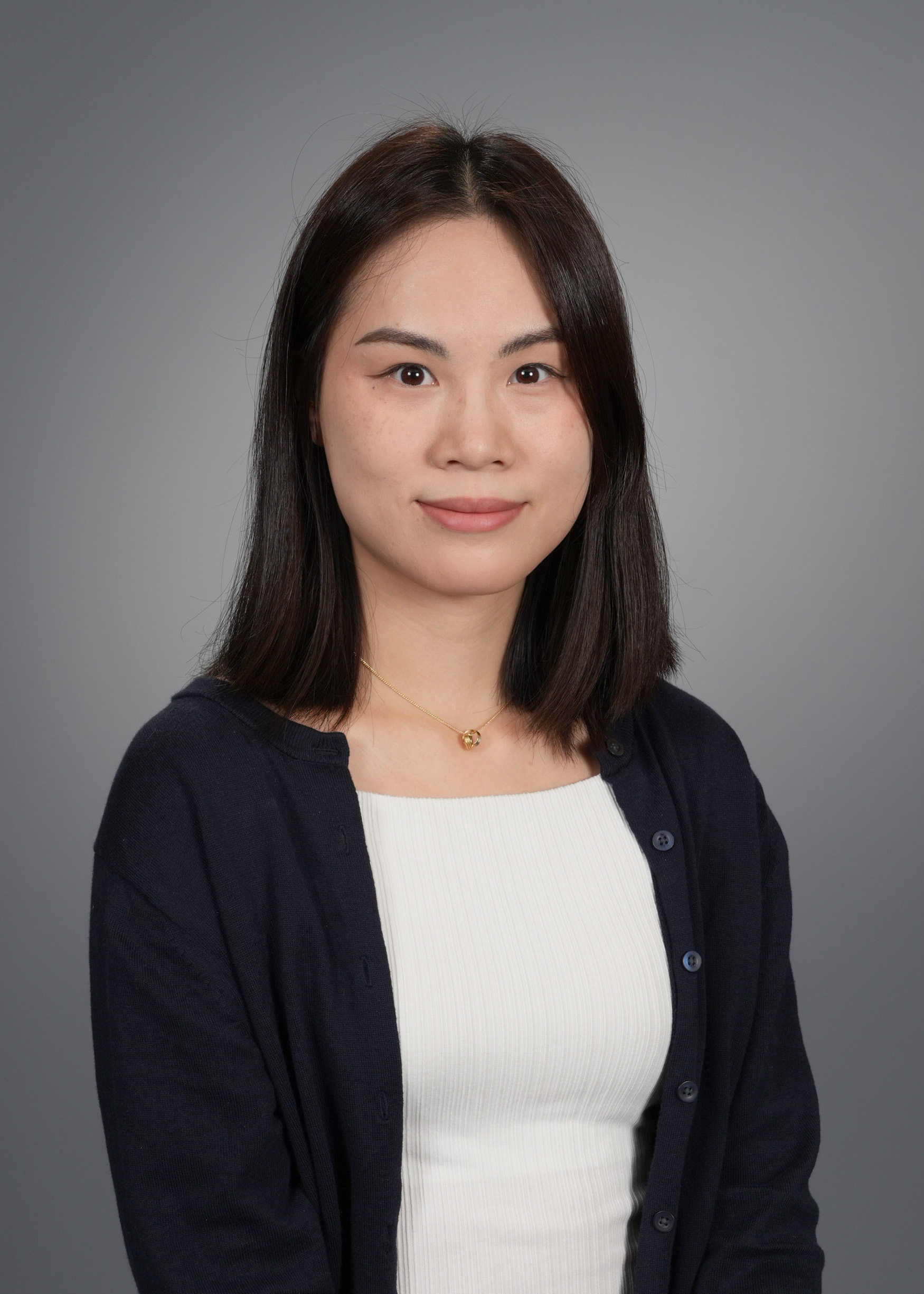
WanHsuan Huang, MEd, NCC, PLPC
Clinician
WanHsuan (she/her/hers) is a Provisional Licensed Professional Counselor (PLPC), holding a master’s degree in Clinical Mental Health Counseling from Pennsylvania State University. She has been a National Certified Counselor since 2023. As a clinician, WanHsuan is committed to providing empathetic therapy across a spectrum of concerns, fostering positive changes through self-exploration.
While being a generalist, WanHsuan possesses experience in supporting college students through various issues, including anxiety, depression, stress, trauma, identity exploration, and interpersonal relationships. Guided by her proficiency in Humanistic, Relational Therapy, Cognitive-Behavioral, and Dialectical-Behavioral therapy, WanHsuan’s main objective is to empower individuals, enabling them to surpass challenges and cultivate resilience for overall well-being.
Beyond her role as a clinician, WanHsuan finds joy in reading, watching movies, bouldering, and discovering new coffee shops and restaurants.

Collin Gallery, PLPC, CMPC
Athletics Mental Health Clinician
Collin joined UCM as the Athletics Mental Health Clinician in November of 2025. He is currently a Provisionally Licensed Professional Counselor in Missouri (PLPC) and a Licensed Professional Counselor (LPC) in Kansas. Collin is also a Certified Mental Performance Consultant (CMPC) through the Association for Applied Sport Psychology (AASP). Collin’s role is specifically with UCM Athletics, where he will provide clinical and mental performance services to student-athletes.
Collin spent 3 years working at Kansas State Athletics, in the Mental Wellness and Sport Psychology department, providing psychological services to athletes. He also has experience working in college counseling centers and private practice. Collin graduated from Emporia State with a Master’s Degree in Clinical Counseling, with an emphasis in Mental Health. He received his Bachelor’s Degree in Psychology from Kansas State.

Keosha Myers, LMFT
Clinician
Keosha joined the Counseling Center in January 2026 and is a Licensed Marital and Family Therapist. Keosha received her Bachelor's Degree in Social Work from UCM in 2015 and her Masters Degree in Human and Family Development with an emphasis in Marriage and Family Therapy from UCM in 2019. She spent over a decade working with survivors of domestic and sexual violence providing crisis management and therapy services. Keosha plans to bring the skills and therapy approaches she learned throughout her time of being a domestic and sexual violence clinician to continue to help the students at UCM.
In her free time, she enjoys being around her family and friends, planning a trip (or 2), exploring new restaurants and doing genealogical research.
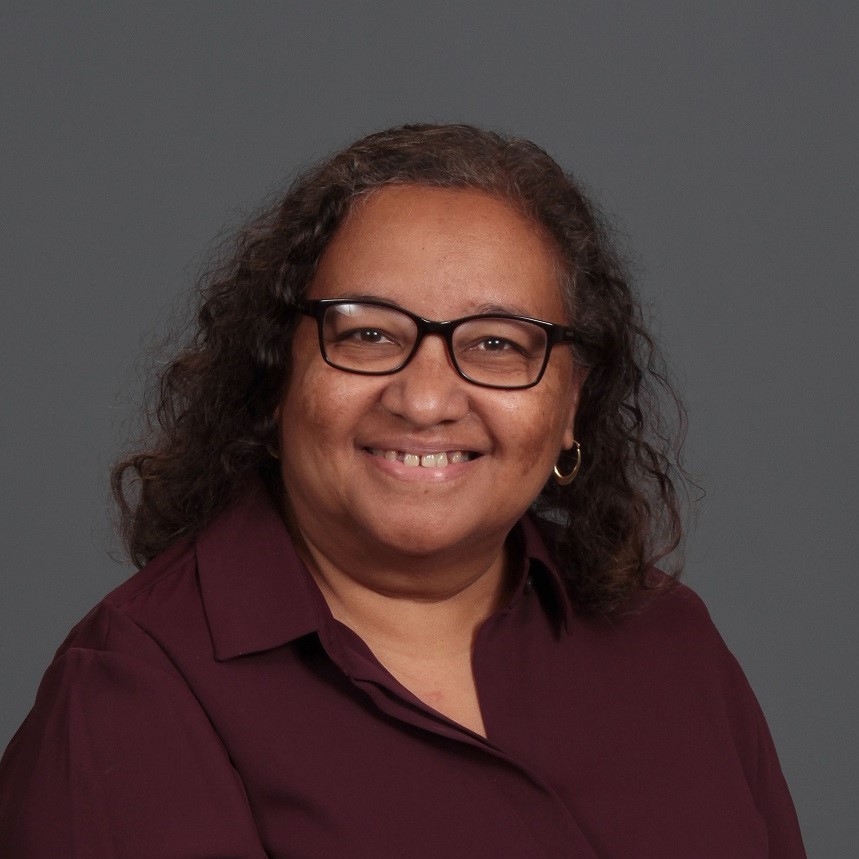
Briget Rucker
Office Professional
Briget earned her bachelor's degree in psychology from UCM. In her spare time, she likes to crochet, shop and spend time with family.
Other UCM Resources
- Public Safety
- Discrimination, Harassment, Sexual Misconduct & Retaliation
- Central Missouri Clinic (staffed by 2nd year graduate students)
- Hough Counseling Center (staffed by 2nd year graduate students)
We are proud to be accredited through International Accreditation of Counseling Services.
The UCM Counseling Center is the only IACS accredited public university in the state
of Missouri.
testimonial
The Counseling Center Mission
The Counseling Center promotes students' psychological wellbeing and development of awareness, knowledge, and skills that impact their success as learners and leaders in their personal lives and in the community.
Contact
Counseling Center
Humphreys H190
Warrensburg, MO 64093
Tel: (660) 543-4060
Fax: (660) 543-8277
UCM's 24/7 Crisis and Counseling Support Line
660-543-8008
Fall & Spring Hours
| Monday - Friday | 8 am - 12 pm and 1-5 pm |
| ____ | ____ |
| Saturday | Closed |
| Sunday | Closed |
Summer Hours
| Mon.-Thurs. | 7:30 am - 12 pm and 1-4:30 pm |
| ____ | ____ |
| Friday | Closed |
| Saturday | Closed |
| Sunday | Closed |


